
Lab Spotlight: the Chidley Lab
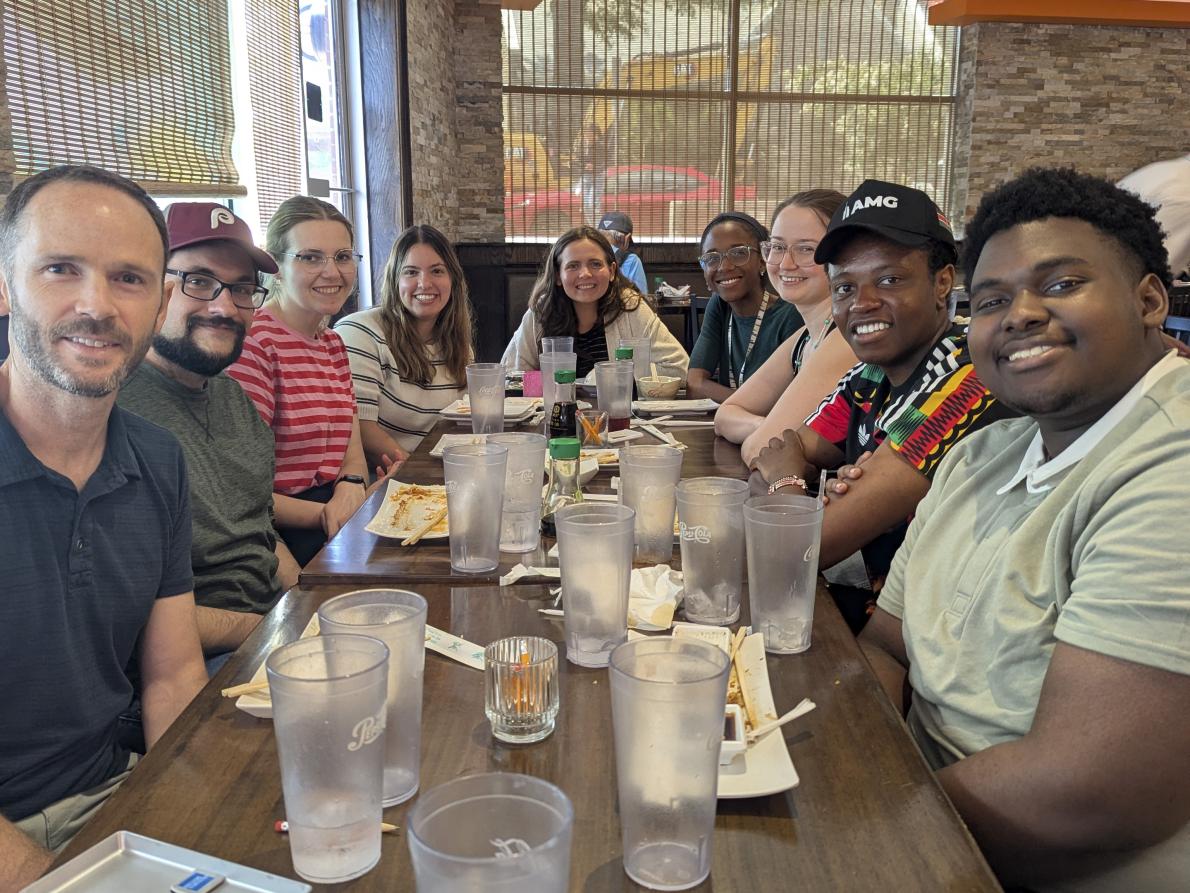
What are the main scientific questions of your lab?
Cells depend on hundreds of membrane transporters to control the movement of nutrients, metabolites, and drugs across biological membranes. Despite their fundamental importance in maintaining cellular homeostasis, the functions of many human transporters remain unknown.
The Chidley Lab seeks to understand how transporters shape metabolism, cell physiology, and therapeutic response. We develop functional genomics approaches and combine then with biochemistry, cell biology, and cancer metabolism tools to identify the metabolites and drugs transported by human transporters and determine how these transport processes are regulated in healthy tissues and disease. A major focus of the lab is understanding how the tumor microenvironment influences nutrient availability and identifying transporter-dependent metabolic vulnerabilities that can be exploited for cancer therapy.
How does your research impact the understanding or treatment of cancer or other human diseases?
Cancer cells must continually adapt to nutrient limitation, competition, and metabolic stress. By identifying the transporter gatekeepers that control nutrient uptake and metabolite exchange, our research aims to uncover previously unrecognized mechanisms of tumor growth, drug resistance, and interactions between cancer cells and their surrounding microenvironment. These discoveries may uncover new therapeutic targets and improve our understanding of malignant growth.
Beyond cancer, mutations in membrane transporters contribute to a wide range of human diseases, including metabolic, developmental, and neurological disorders. In parallel with making biological discoveries, we are developing scalable technologies to systematically characterize human transporters, creating broadly applicable tools and resources that can accelerate research across cancer biology, metabolism, pharmacology, and human genetics.
Tell us about your mentoring style and your lab (and your former trainees).
I believe the best training comes from tackling important scientific questions with rigor, creativity, and careful experimentation. Lab members are encouraged to think deeply about their projects, design decisive experiments, and develop the quantitative and technical skills needed to answer challenging biological questions. They are given substantial ownership of their work, with mentorship tailored to their stage of training and long-term career goals.
Our lab values open scientific discussion and constructive debate. We regularly challenge one another's ideas, interpret data critically, and work together to design the next experiment. I want trainees to leave the lab not only with technical expertise spanning molecular biology, genomics, biochemistry, and computational analysis, but also with the confidence and scientific judgment to become independent investigators.
What else do you want to share about the lab?
We work closely with collaborators across Duke and beyond to combine expertise in cancer biology, metabolism, structural biology, chemistry, and functional genomics. Many of the questions we study require new experimental approaches, and a major focus of the lab is developing pooled screening technologies to systematically identify metabolite and drug transporters and understand how they shape cell physiology and disease. We welcome students, postdoctoral fellows, and collaborators who are motivated by rigorous experimentation, interdisciplinary science, and tackling challenging biological problems. As a new laboratory, we are building a team that values careful thinking, technical creativity, and the pursuit of fundamental questions in cell biology.