
Alumni Spotlight on Shane Killarney: Saying Yes to Science and Service
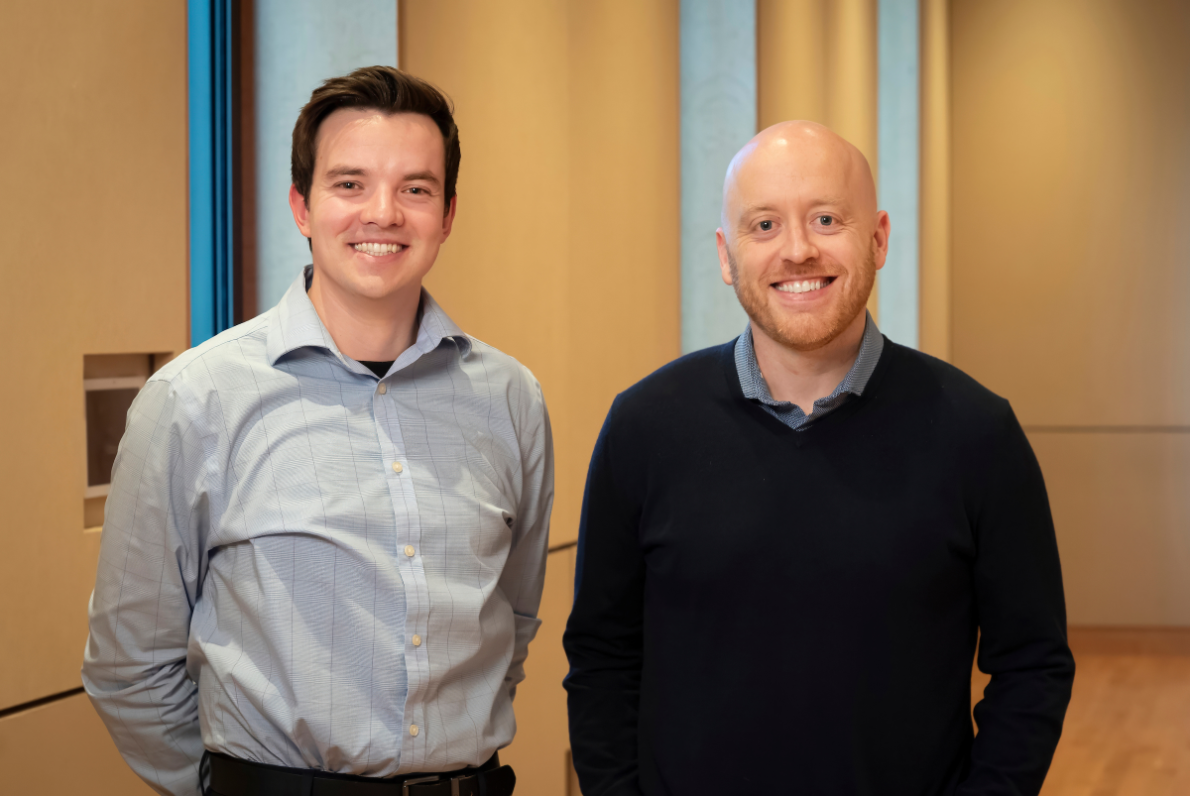
Saying Yes to Science and Service
When Shane Killarney began medical school at Duke University, he spent a month conducting research in the lab of cancer biologist Kris Wood, PhD. The experience was so rewarding that he decided to say yes to the long road of pursuing an MD-PhD and becoming a clinician-scientist. He has set his sights on treating cancer patients while also developing better treatment options for them. Now an internal medicine resident at Brigham and Women’s Hospital, a Harvard Medical School affiliate, Killarney is well on his way.
From Firehouse Dreams to the Lab Bench
Killarney spent his teen years expecting to become a New York City firefighter, like his grandfather, father, great uncle, and two uncles. “My father always told me to pick a career where you're working in your community and you’re helping people,” Killarney said.
But after high school, a community college astronomy class rekindled his love of science. His father’s advice helped him say yes to medicine — a new way to serve. That moment marked the beginning of his journey to Duke, where he found a community that encouraged curiosity and collaboration.
An FDNY scholarship helped Killarney complete two years of community college. Then he transferred to UNLV, where he graduated magna cum laude and set his sights on oncology. The field’s gravity and the chance to build long-term relationships with patients drew him.
Finding His Scientific Voice at Duke PCB
At Duke, Killarney thrived in the Department of Pharmacology and Cancer Biology (PCB), where he earned the Duke Cancer Institute Scientific Achievement Award in 2023 and the Dean’s Award for Excellence in Research in 2024, which honors graduate students for leadership, publication record, and contributions to the scientific community.
“Shane is among the most gifted, intelligent, conscientious, and rigorous scientists I’ve known at any age,” said Wood.
Killarney credits the PCB environment for shaping his approach to science. The relaxed, open atmosphere in Wood’s lab helped him thrive. Bonding activities like a lab fantasy football league built trust and camaraderie. “When you’re hitting a wall with your science, you’ve got these relationships with 20 people you see every day,” he said.
That sense of community extended across the department. “I felt completely comfortable saying, ‘Hey, I don’t know how to do this,’” he said. “Even professors who weren’t my direct mentors would respond to email questions the same day. That is an incredible way to move science forward.”
A Breakthrough Born from Collaboration
One of those relationships helped shift his research. Killarney had been mining public datasets showing how cancer cell lines respond when specific genes are knocked out. He was especially interested in tamping down certain cytokines (signaling proteins that can nurture cancer) to reduce cancer growth. But in the lab, that intervention didn’t change much.
One evening, frustrated after another failed experiment, he vented to his colleague Caroline Teddy. “She opened the door to this idea that maybe the cytokines were downstream of something bigger,” he said.
That night, he returned to the database. For hours, he sat with Teddy’s question: “What’s upstream of this?” He began looking at a key transition: when cancer cells shift from an epithelial to a mesenchymal-like state — a change linked to drug resistance and invasiveness. That’s when things clicked. The cytokines only mattered in tumors that had already entered this mesenchymal state.
“I sent Caroline a screenshot of the data, and she just cracked up. It was a full-circle moment,” he said.
That insight led to his discovery that inhibiting an under-studied enzyme may prevent cancers from becoming aggressive and resistant to treatment. The work, with Killarney as first author, was published in Cancer Discovery in March 2025 and featured on the cover.
For Killarney, the collaborative spirit of Duke PCB remains a guiding force. “At Duke, the answer was never ‘figure it out alone.’ It was always ‘Yes, let’s figure it out together,’” he said.